


Collections作品紹介
※クリックで拡大画像がご覧いただけます。
※Click for larger image(↓)
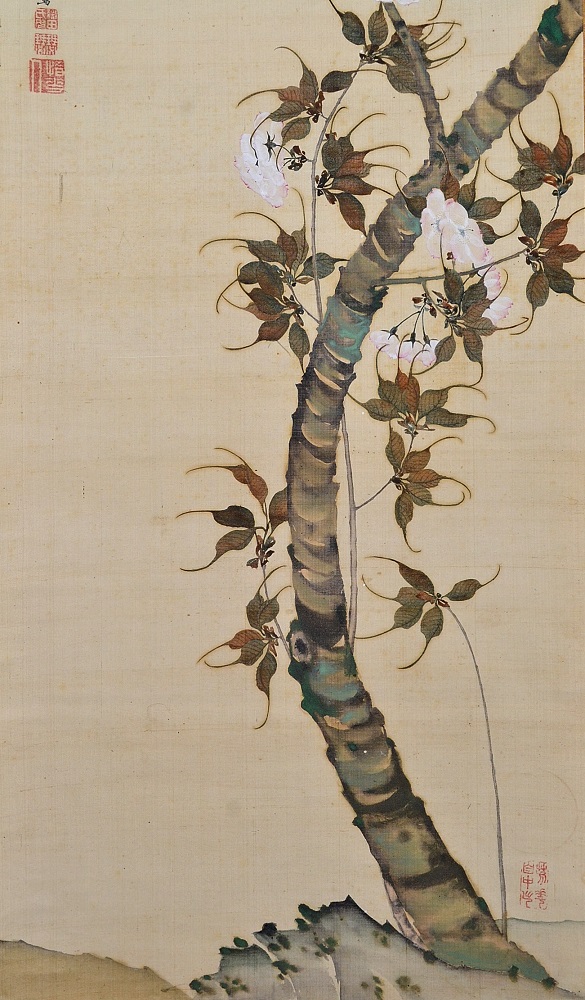
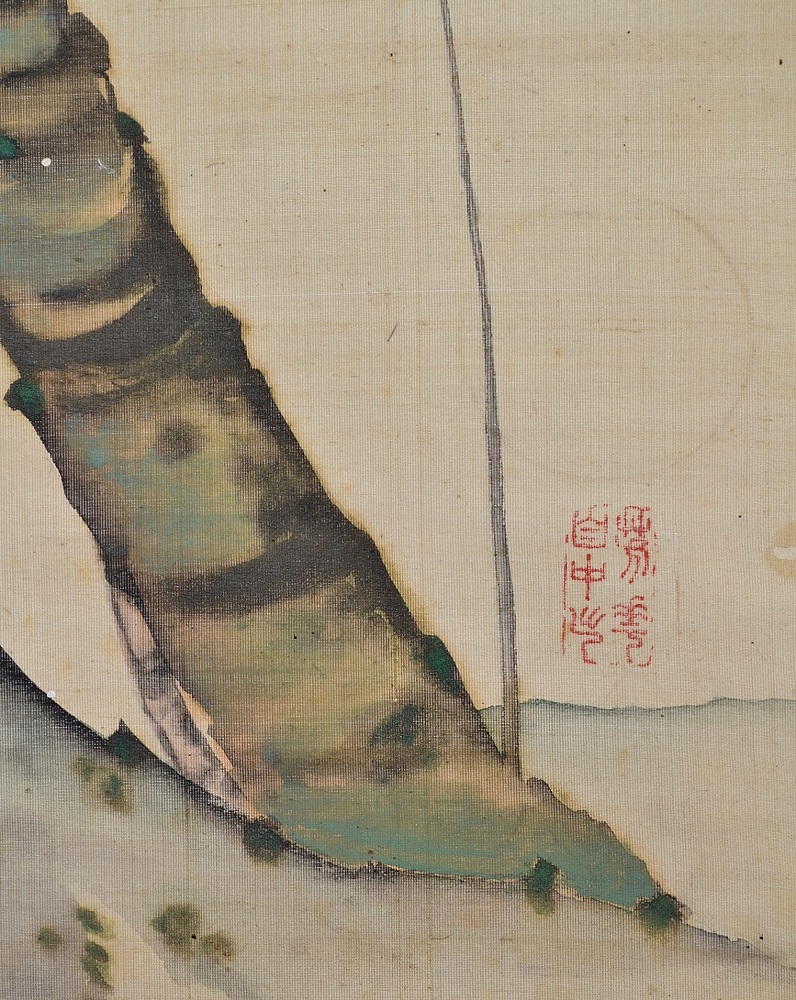
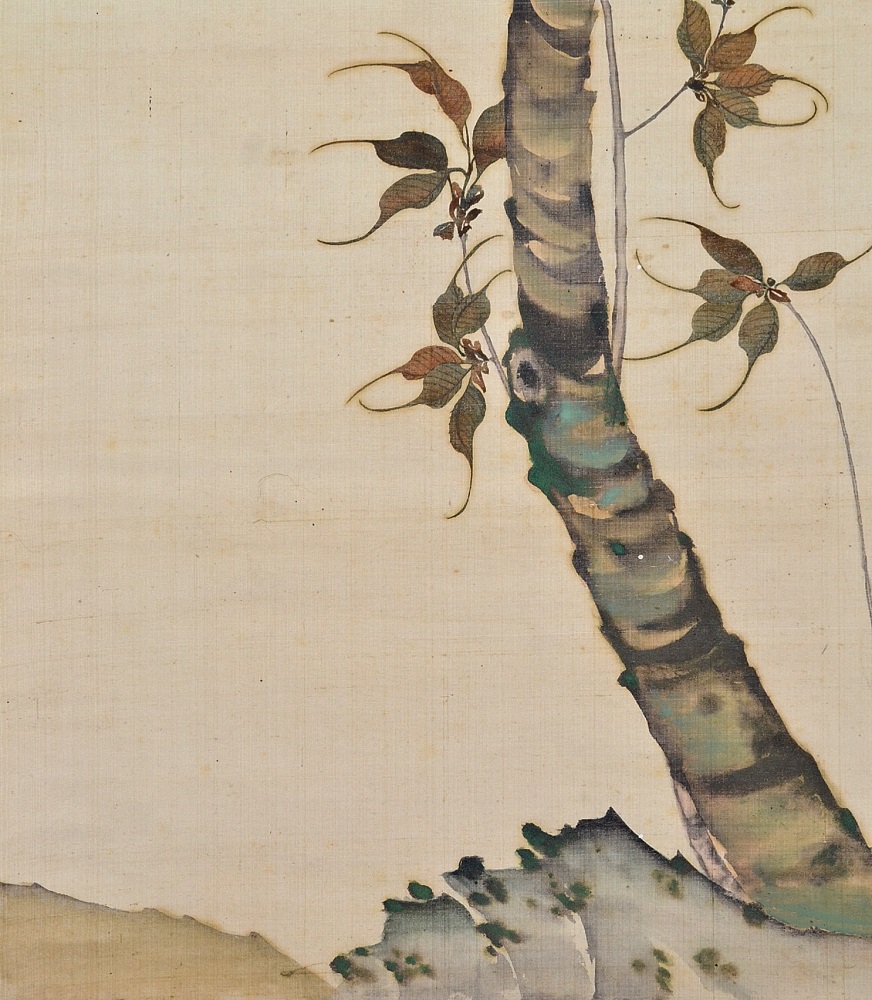
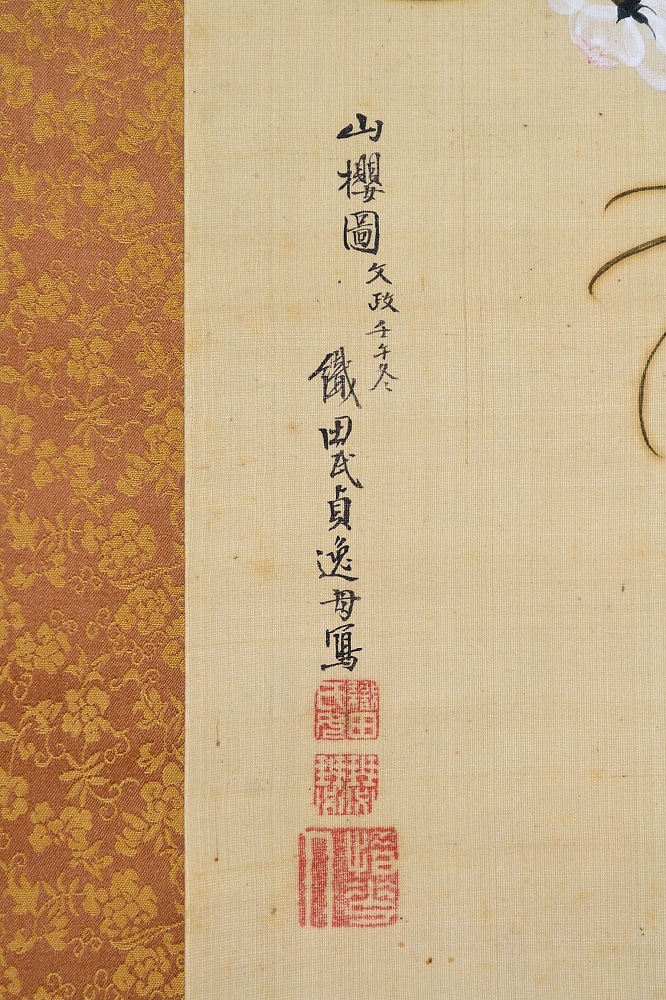
| Artist 作家名 |
Oda Shitsu Shitsu 織田瑟々 |
|---|---|
| Material 手法 |
Paint on Silk 絹本・彩色 |
| Dimensions 寸法 |
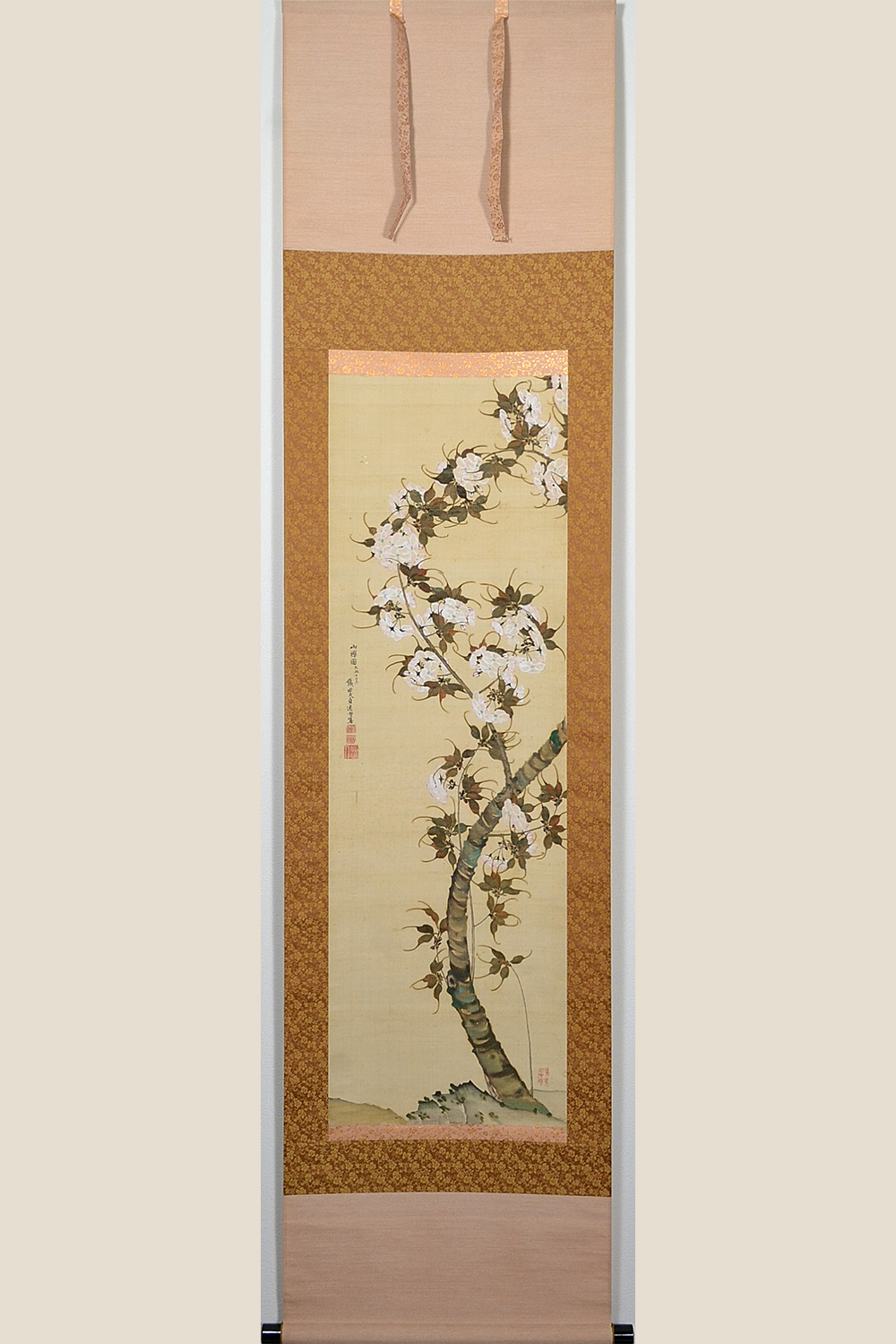
本紙:102.0×32.2㎝(Image) 総丈:182.0×44.6㎝(Mount) |
| Caption 備考 |
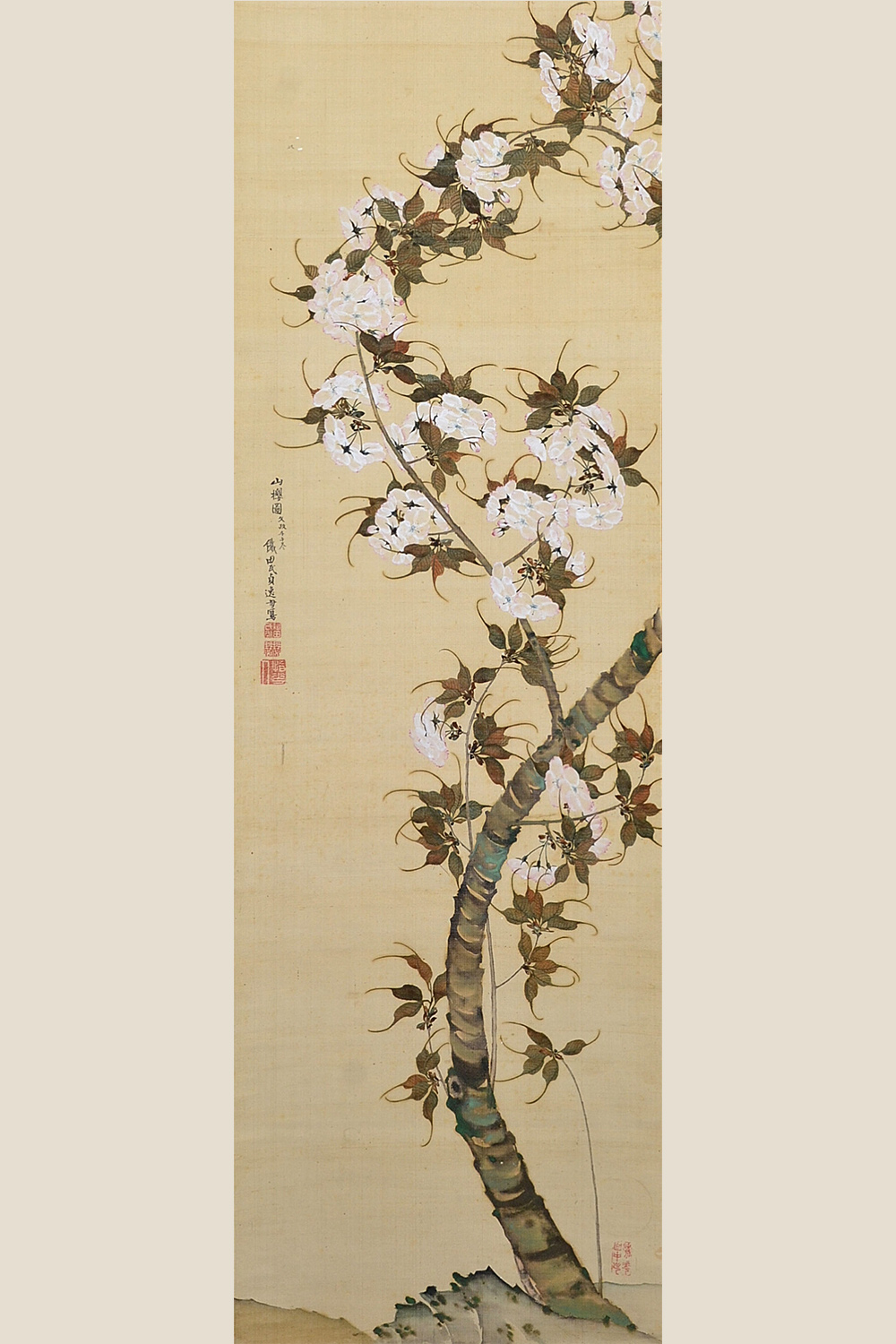
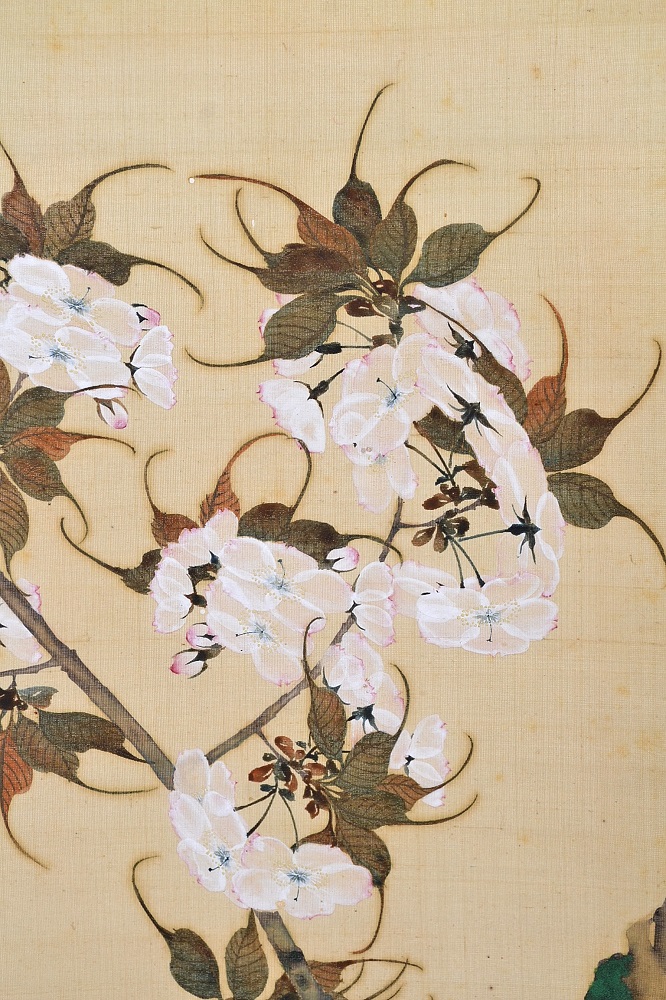
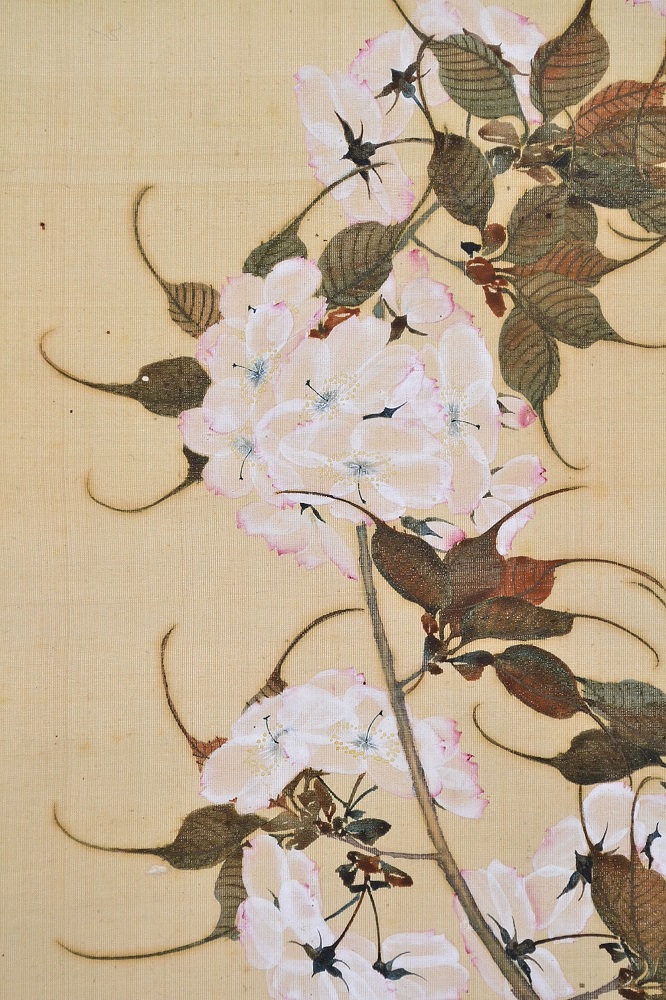
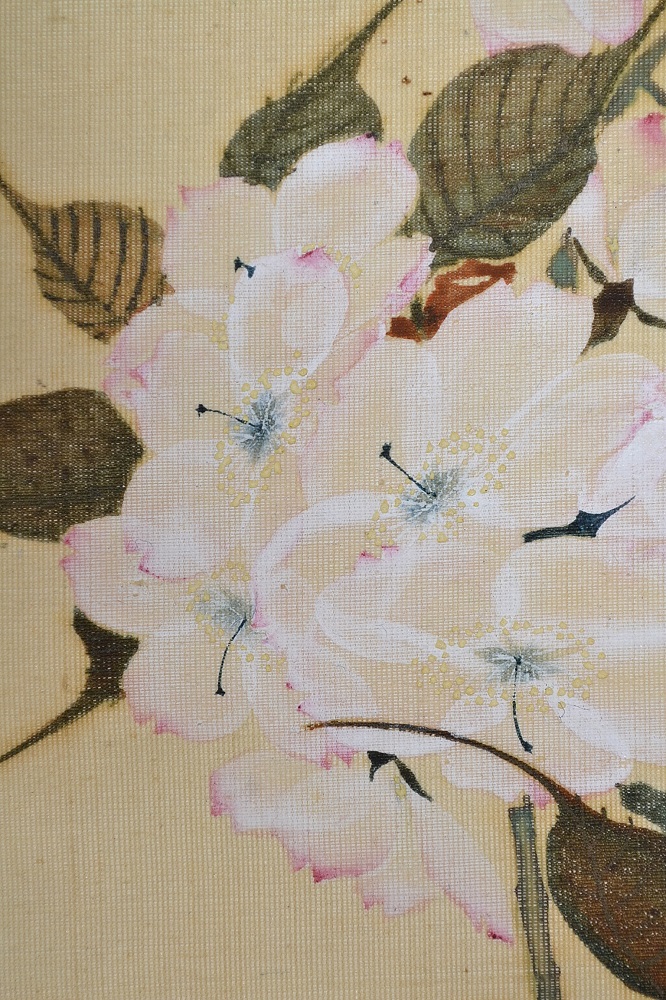
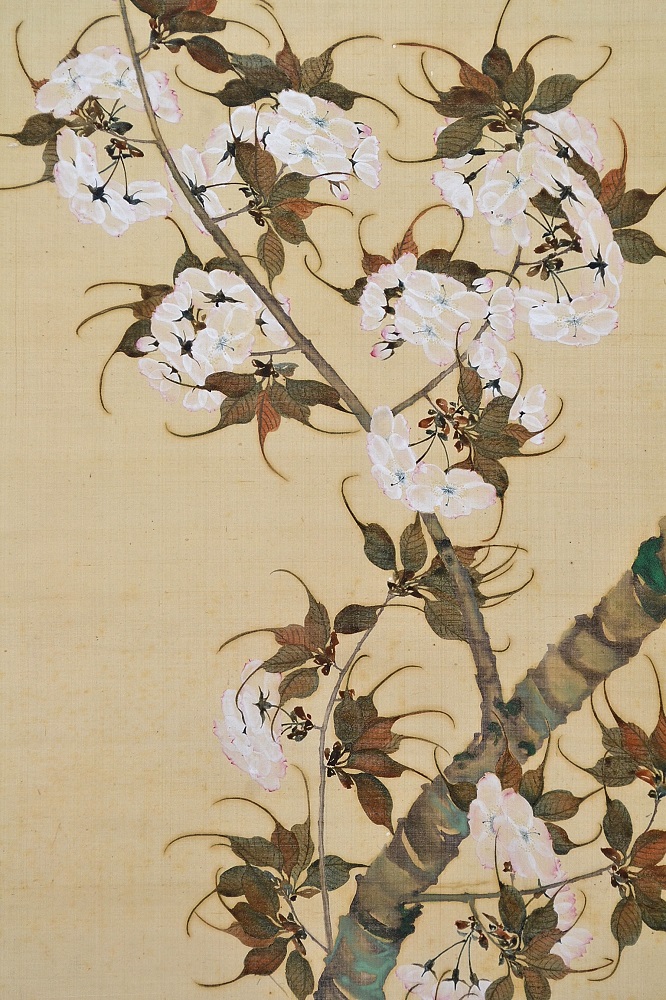
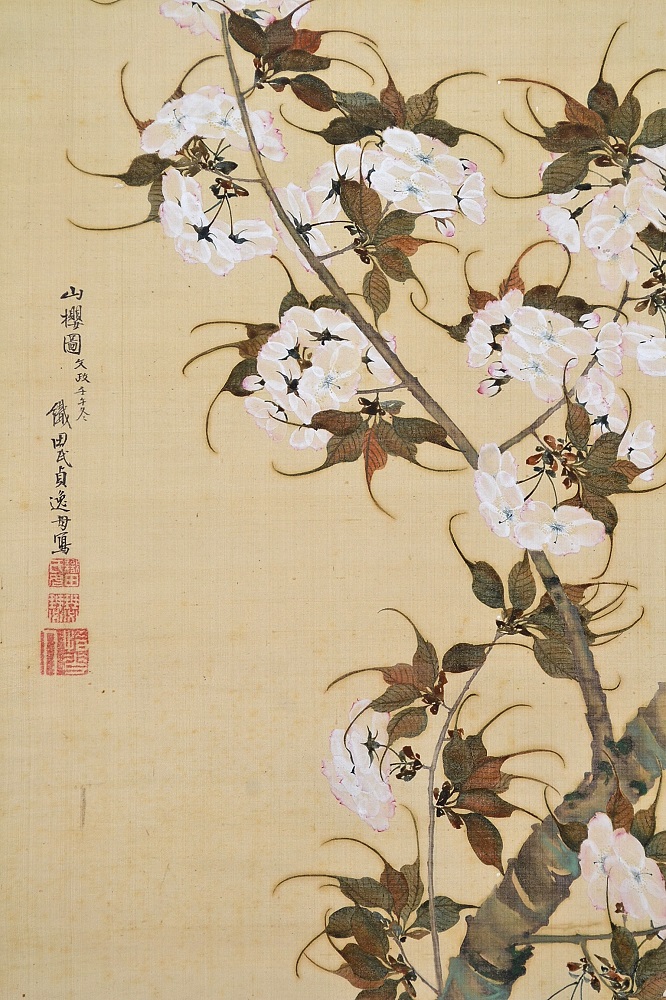
瑟々の描く桜は、幹の形も大胆で花も少し扁平形をし、葉先は不自然な程糸状に伸びる。 一見、博物画のような精緻さながら、実際にはありえない姿という特徴をもつ。 The cherry blossoms depicted by Shitsu Shitsu feature boldly shaped trunks, slightly flattened flowers, and leaves with tips elongated into unnaturally thread-like filaments. Though at first glance possessing the meticulous detail of a botanical illustration, they are characterized by forms that are impossible in reality. ・「山櫻図 文政壬牛(1822)冬 織田氏貞逸母冩」 ・印「織田氏女」「瑟瑟」「惜華人」 【山櫻】 日本に古くから自生するバラ科サクラ属の落葉高木。 4月上旬~中旬頃、ソメイヨシノより少し遅れて、若葉の赤褐色と淡紅白色の花が同時に開くのが最大の特徴。 奈良の吉野山が名所として知られ、和歌にも多く詠まれた日本を代表するサクラ。 A deciduous tree of the genus Prunus in the Rosaceae family, native to Japan since ancient times. Its most distinctive feature is that its reddish-brown young leaves and pale pink-white flowers bloom simultaneously around early to mid-April, slightly later than the Somei-Yoshino cherry. Famous for its locations in Yoshino Mountain, Nara, and frequently celebrated in waka poetry, it is Japan's representative cherry blossom. |
| Period 製作年 |
文政壬牛(1822)冬 ※瑟々43歳作(Her work at age 43) |
| Condition 状態 |
There are stains. シミが御座います。 |
| Accessory 付属品 |
box 合わせ箱 |
| Biography 略歴 |
【織田瑟々(1779~1832)】 生涯桜花を描き続けた江戸時代後期の三熊派※①の最後の継承者で女流絵師。 近江の川合寺で津田内匠貞秀の長女として誕生する。 津田家は織田信長の九男織田信貞を遠祖とし、豊臣秀吉より神崎郡内御園荘に領国を賜り川合寺に館を築いた。 結婚後、京都へ移り娘が生まれるが、寛政6年(1794年)に娘が夭逝。 その後若いころから好んでいた画を本格的に学ぶため、京都で三熊思孝、露香に師事。 その後、夫の岐山が死去、次の婿として彦根藩士石居氏の三男信章を迎えて一男貞逸をもうけたが、信章も瑟々が35歳の時に病死してしまう。 文政10年故郷近江の川合寺に戻った後も桜図の製作を続け地元では「織田桜」として親しまれた。 瑟瑟が桜の絵を描いていると空飛ぶ鳥が実物と間違えその絵の桜に止まりに来たとの逸話も残されている。 ※①桜の絵だけを専門に描き続けた画派。 江戸時代中後期の約60年間という短い期間に京都を中心に活動していた。 祖:三熊思孝(花顛)(1730~1794) 思孝の妹:三熊露香(?~1801) 弟子:広瀬花隠(1772~1849) 織田瑟瑟(1779~1832)の4人が代表的。 The last inheritor of the late Edo period's Mikuma school※① and a female painter who devoted her life to depicting cherry blossoms. Born as the eldest daughter of Tsuda Takumi no Suke Sadahide at Kawai-ji Temple in ?mi. The Tsuda family traced its distant ancestry to Oda Nobusada, the ninth son of Oda Nobunaga. They were granted a fief in Misono Manor within Kanzaki District by Toyotomi Hideyoshi and built a residence at Kawai-ji Temple. After marriage, she moved to Kyoto where she gave birth to a daughter, but the child died young in 1794 (Kansei 6). She then formally studied painting, which she had loved since youth, under Mikuma Shik? and R?k? in Kyoto. Later, her husband, Kizan, passed away. She then welcomed Nobuaki, the third son of the Ishii clan of the Hikone domain, as her next son-in-law, and they had a son, Sadaitsu. However, Nobuaki also died of illness when ShitsuShitsu was 35 years old. After returning to her hometown temple, Kawai-ji in ?mi, in 1827, she continued painting cherry blossoms, becoming known locally as the “Oda Cherry Blossom.” An anecdote remains that when ShitsuShitsu painted cherry blossoms, birds mistook the painting for the real thing and came to perch on the blossoms depicted. ※① A school of painting that specialized exclusively in depicting cherry blossoms. They were active primarily in Kyoto for a relatively short period of about 60 years during the mid-to-late Edo period. |