


Collections作品紹介
※クリックで拡大画像がご覧いただけます。
※Click for larger image(↓)
| Artist 作家名 |
|
|---|---|
| Material 手法 |
Paint on Silk 絹本・彩色 |
| Dimensions 寸法 |
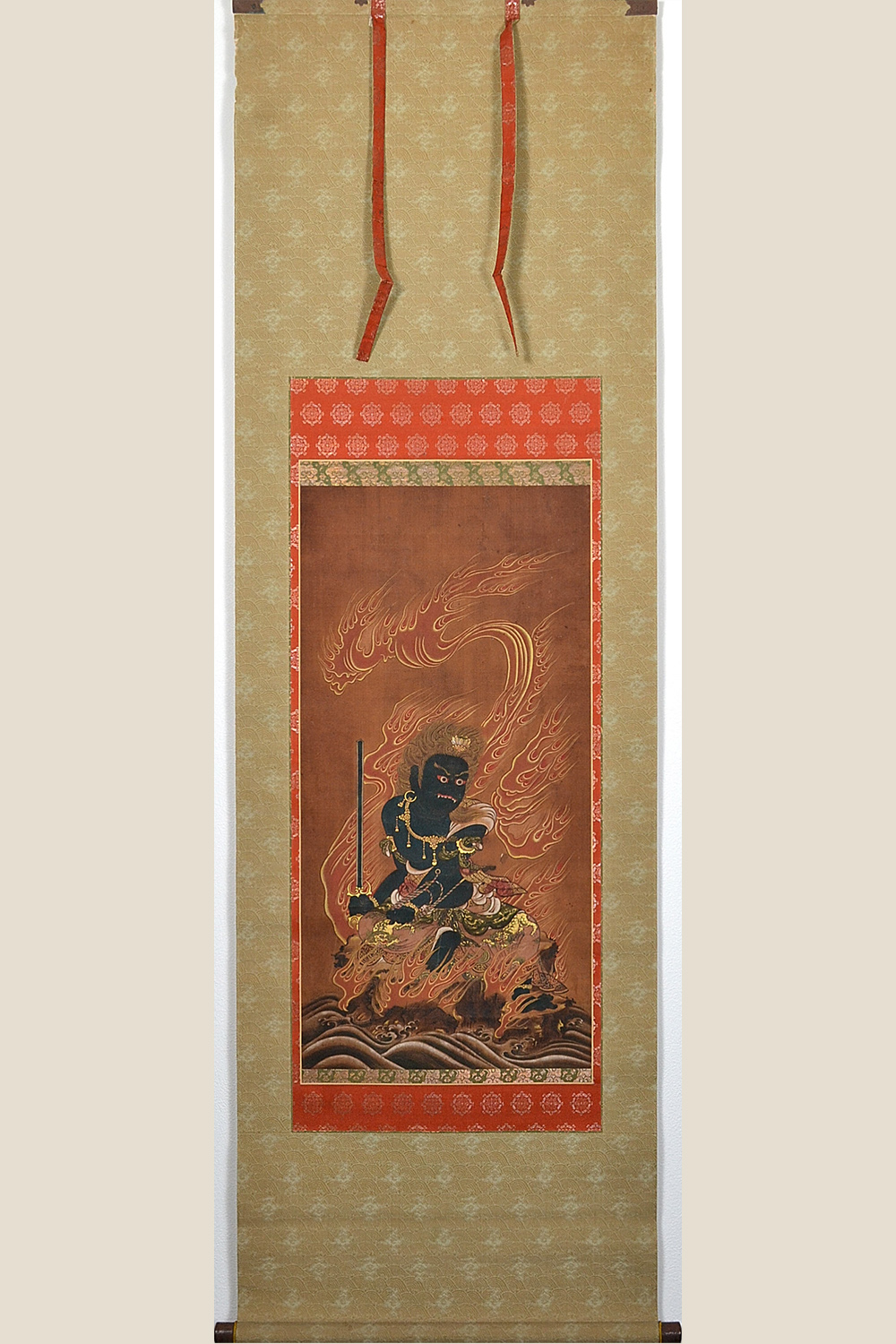
本紙:65.2×32.4㎝(Image) 総丈:149.0×47.0㎝(Mount) |
| Caption 備考 |
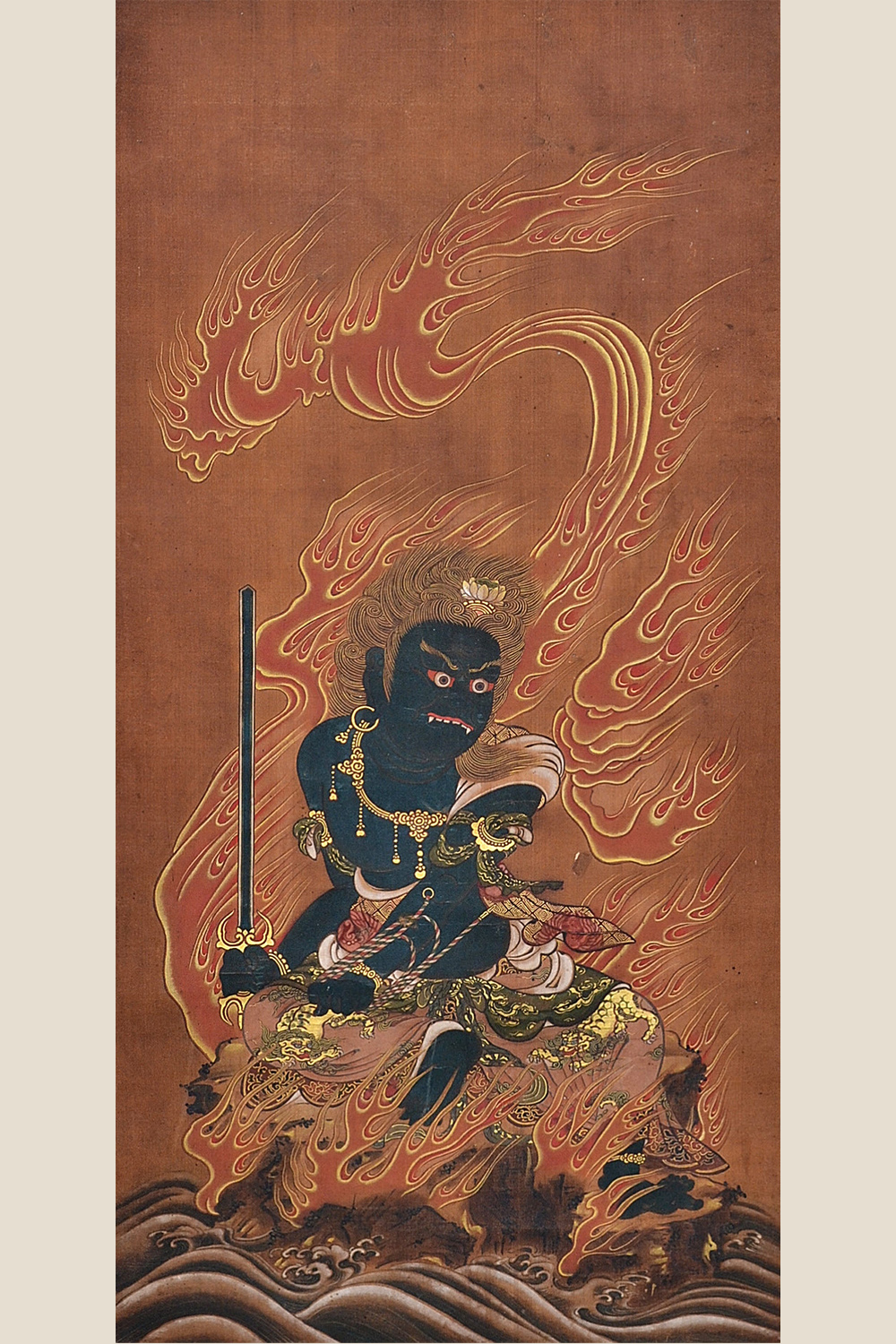
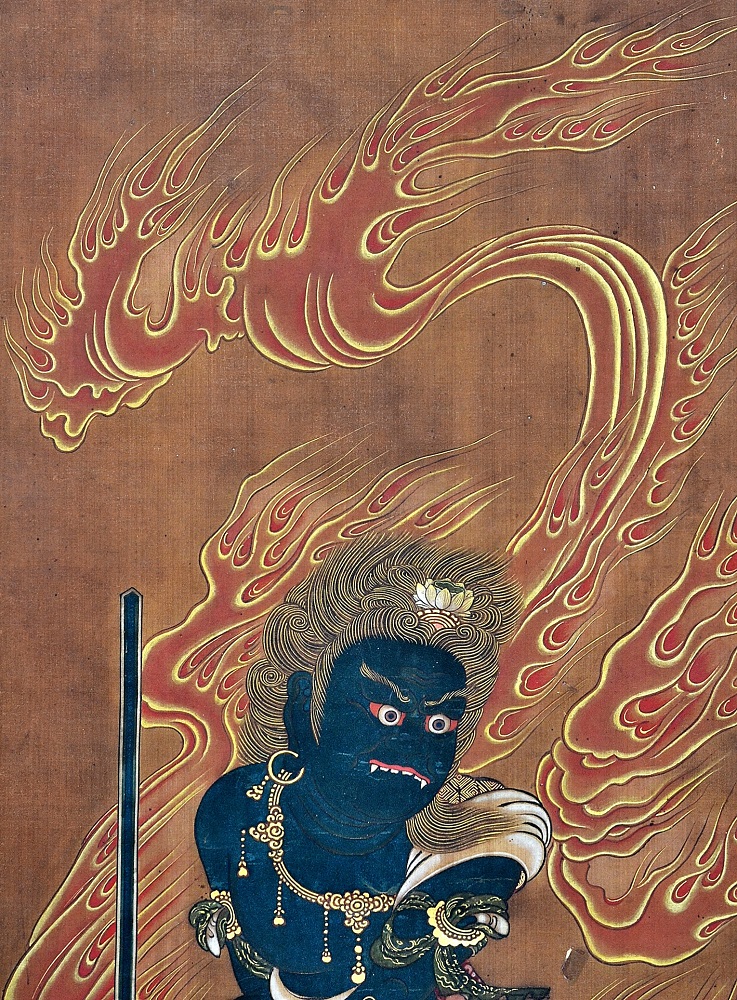
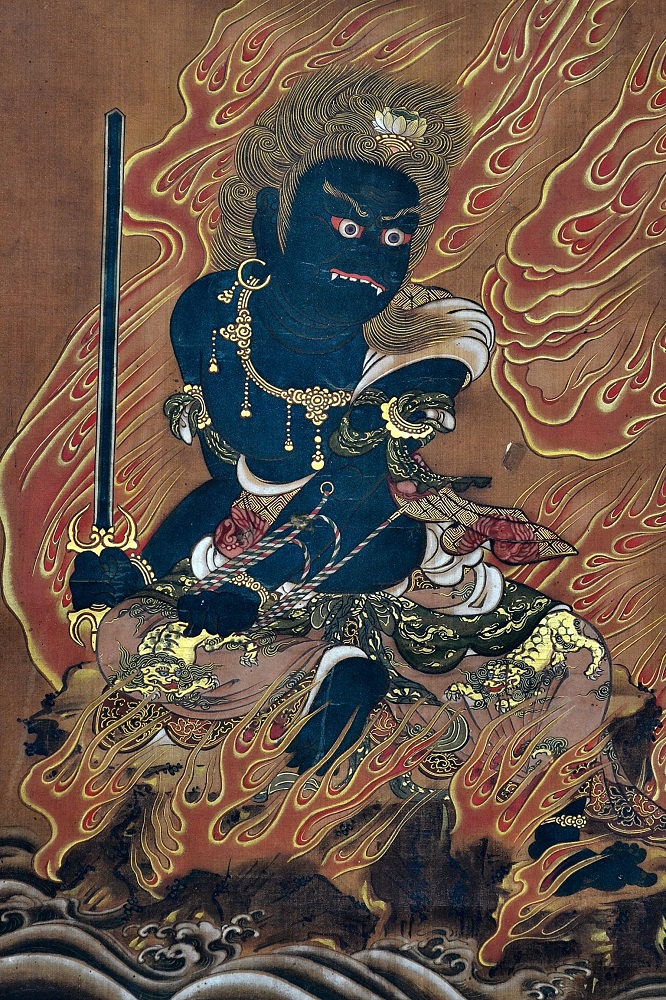
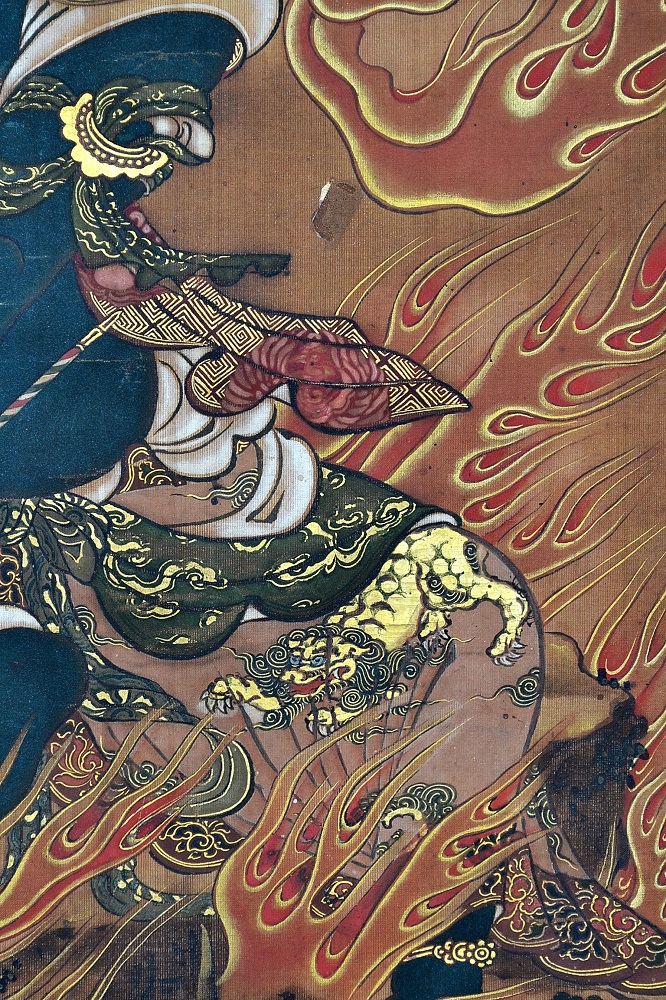
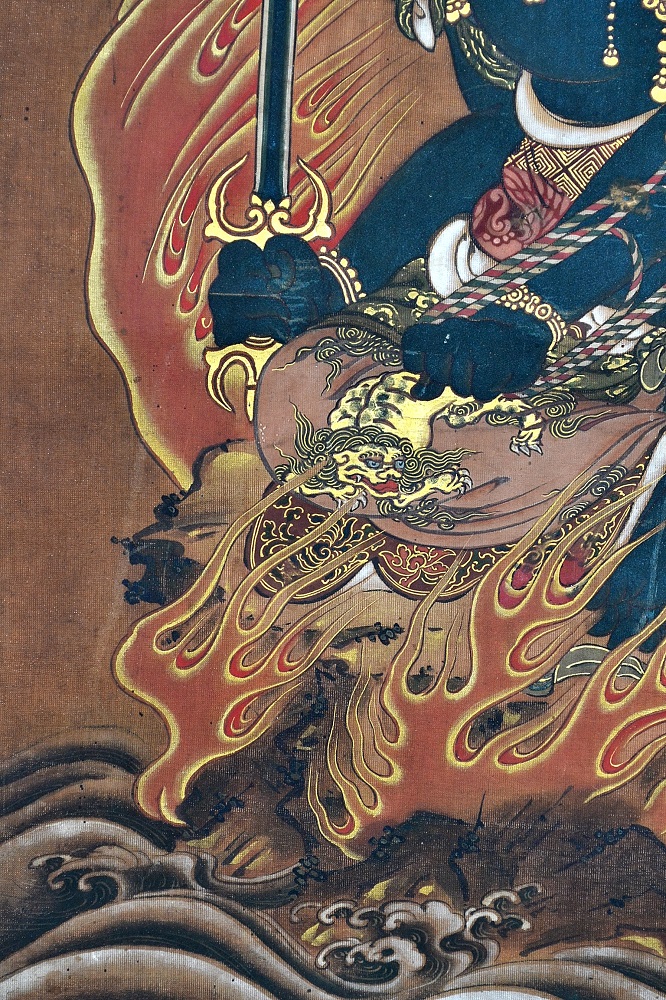
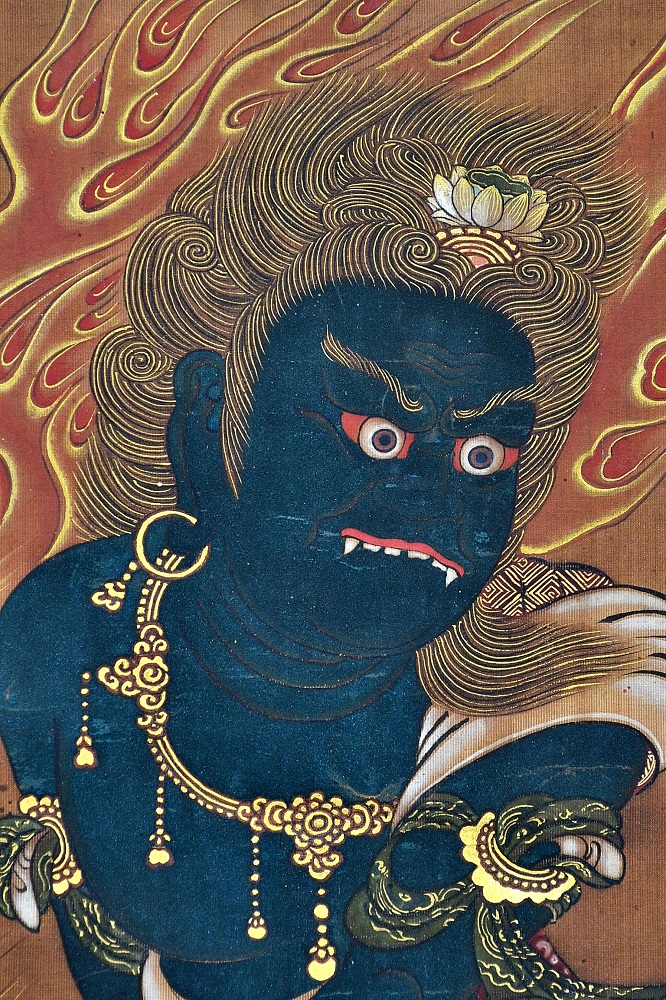
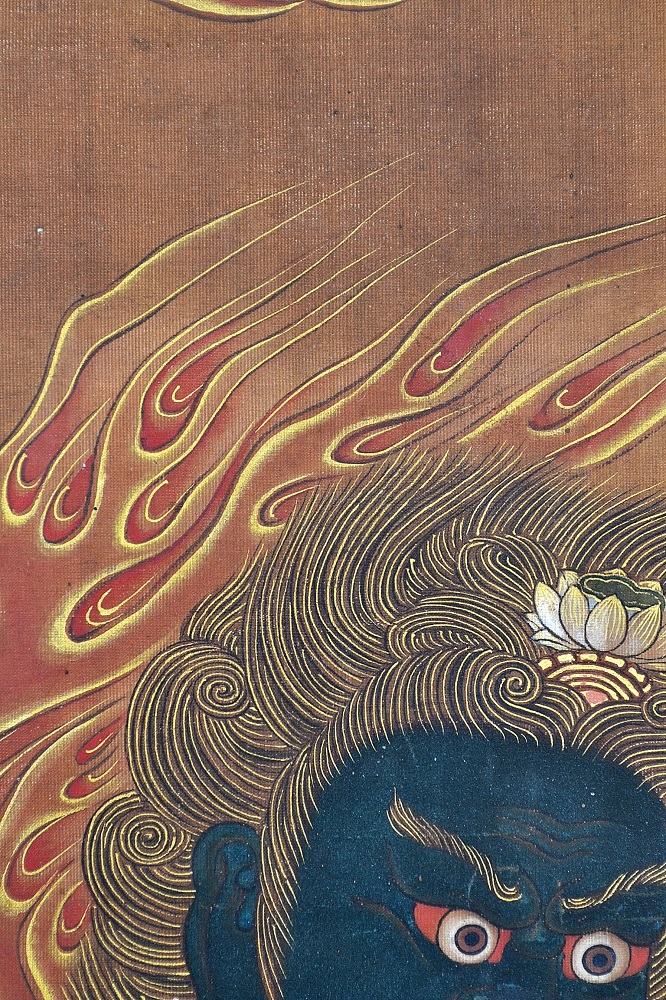
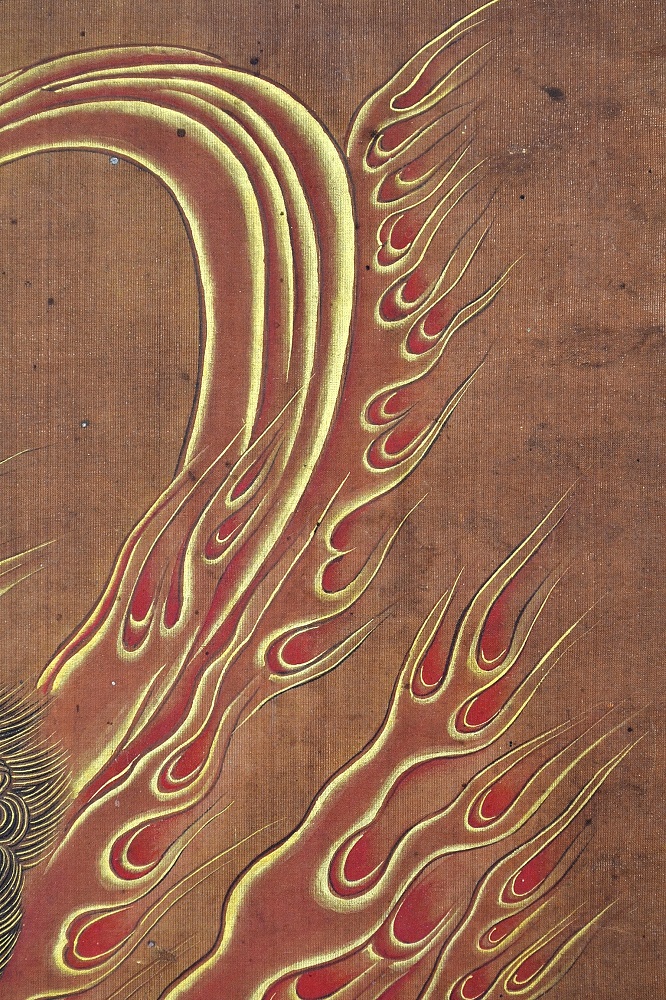
今にも剣を振り切らんばかりの憤怒形で描かれた不動明王の姿。 大日如来の教令を受け、如来の教えに従わない者たちの前に忿怒の形相で現れ教化します。 大日如来像は奈良時代に経典がもたらされ、密教の盛んになる平安時代以降多く造られるようになります。 左手に羂索(縄)、右手に剣を持ち、台座は岩座です。 不動明王の髪型やお顔の表現は平安中期以降変化が見られますが、 本作は巻髪で両目を見開き唇の両側に牙を出す、初期と中期両方の特徴を併せ持ったお姿で描かれています。 「不動」という名には、「悪を降伏し、人々を救う決意が揺らがない」という意味が込められ、 その見た目とは裏腹にとても優しい仏様であり、仏教に帰依し、救いを求める人の願いは必ず叶えて下さると言われています。 筆致には細部へのこだわりがみられ、作者の真心の込もった信仰心が伝わってくるようです。 Fudo Myo-o depicted in a wrathful form, as if about to swing his sword. Receiving the command of Dainichi Nyorai, he appears before those who do not follow the Buddha's teachings with a wrathful countenance to enlighten them. In Japan, scriptures were brought during the Nara period, and many were created after the Heian period when esoteric Buddhism flourished. He holds a noose in his left hand and a sword in his right, seated upon a rock pedestal. While Fudo Myo-o 's hairstyle and facial expression show changes from the mid-Heian period onward, this work depicts him with curled hair, eyes wide open, and fangs protruding from both sides of his lips?a form combining characteristics of both the early and mid-period styles. The name “Fudo” carries the meaning of “unwavering resolve to subdue evil and save people.” Contrary to his appearance, he is said to be a very gentle Buddha who always grants the wishes of those who take refuge in Buddhism and seek salvation. The brushwork reveals meticulous attention to detail, conveying the artist's sincere devotion and faith. |
| Period 製作年 |
18th century 江戸時代中期頃 |
| Condition 状態 |
Stains, slight silk repair marks present. シミ、僅かに絹裂補修跡あり。 |
| Accessory 付属品 |
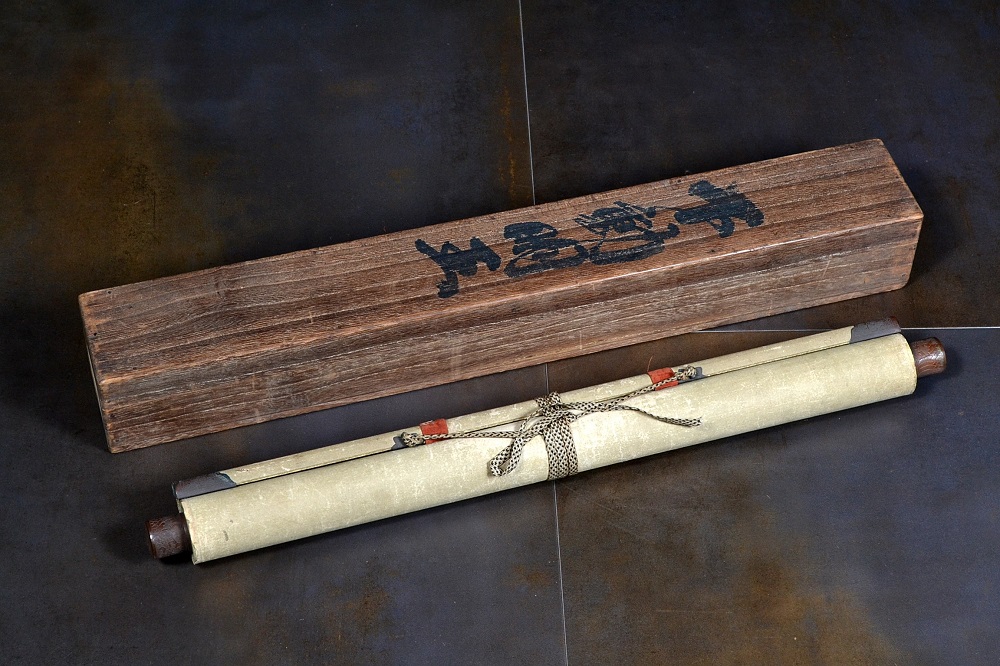
Comes with a old box 時代箱 |
| Biography 略歴 |