


Collections作品紹介
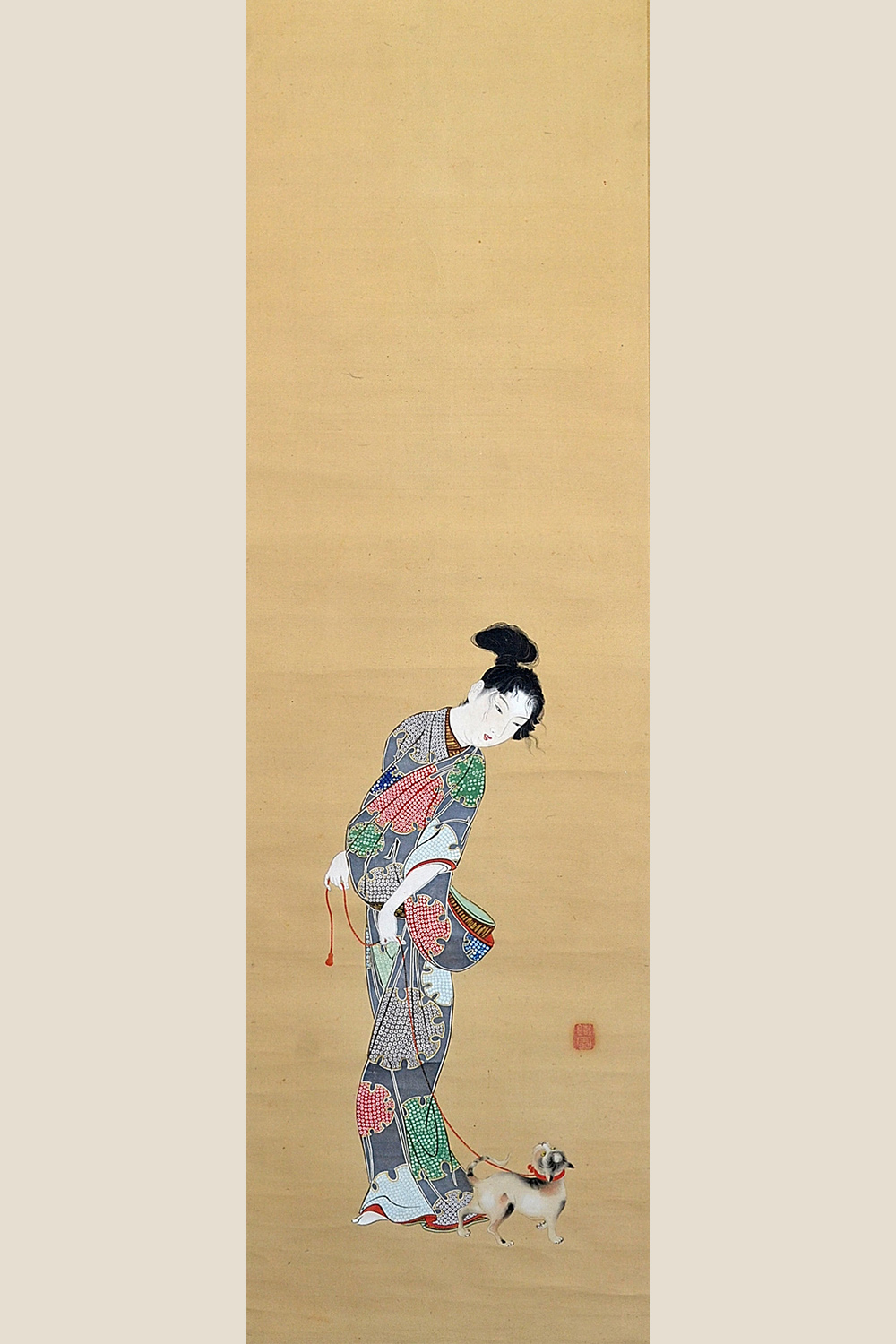
※クリックで拡大画像がご覧いただけます。
※Click for larger image(↓)
| Artist 作家名 |
Sakuma Tetsuen 佐久間鉄園 |
|---|---|
| Material 手法 |
Paint on Silk 絹本・彩色 |
| Dimensions 寸法 |
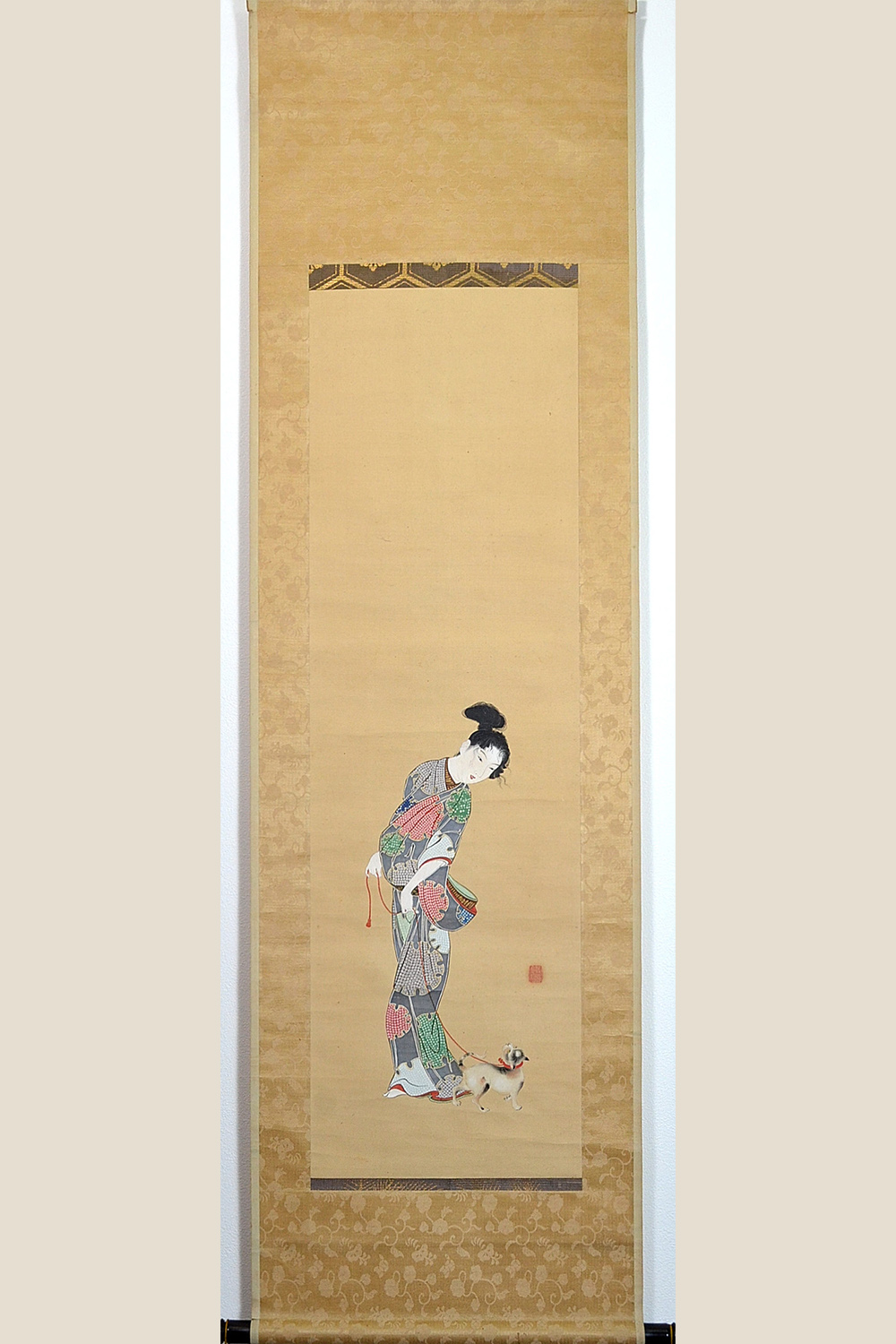
本紙:104.4×31.6㎝(Image) 総丈:158.0×45.8㎝(Mount) |
| Caption 備考 |
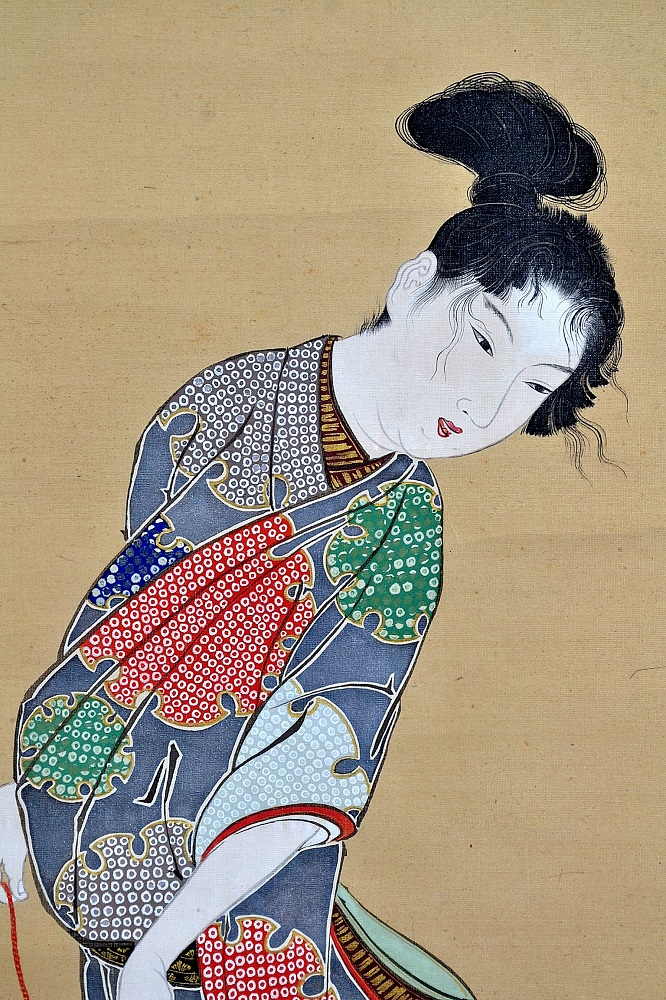
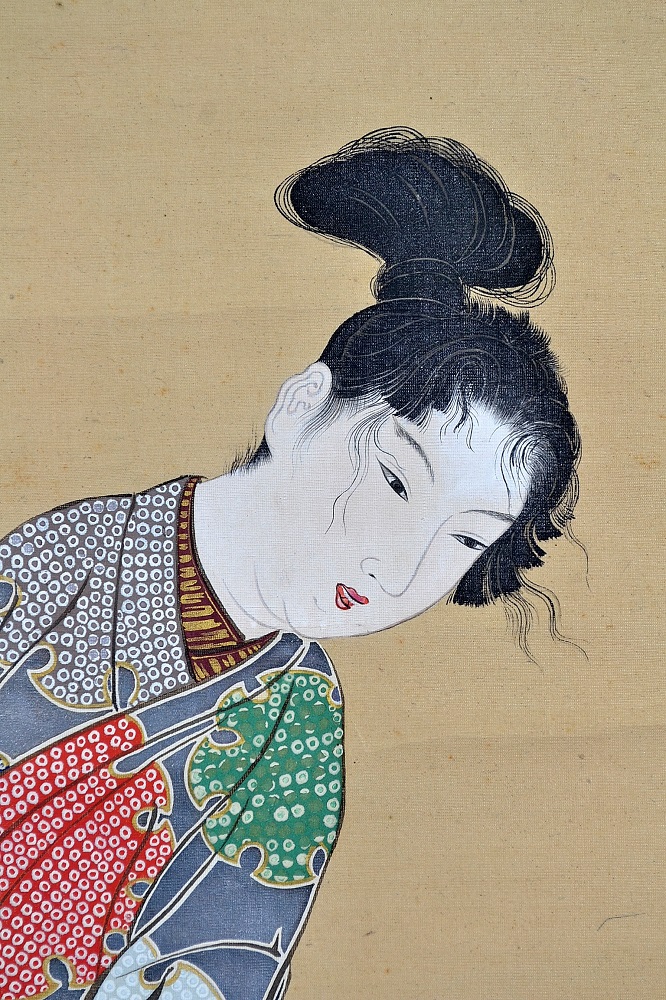
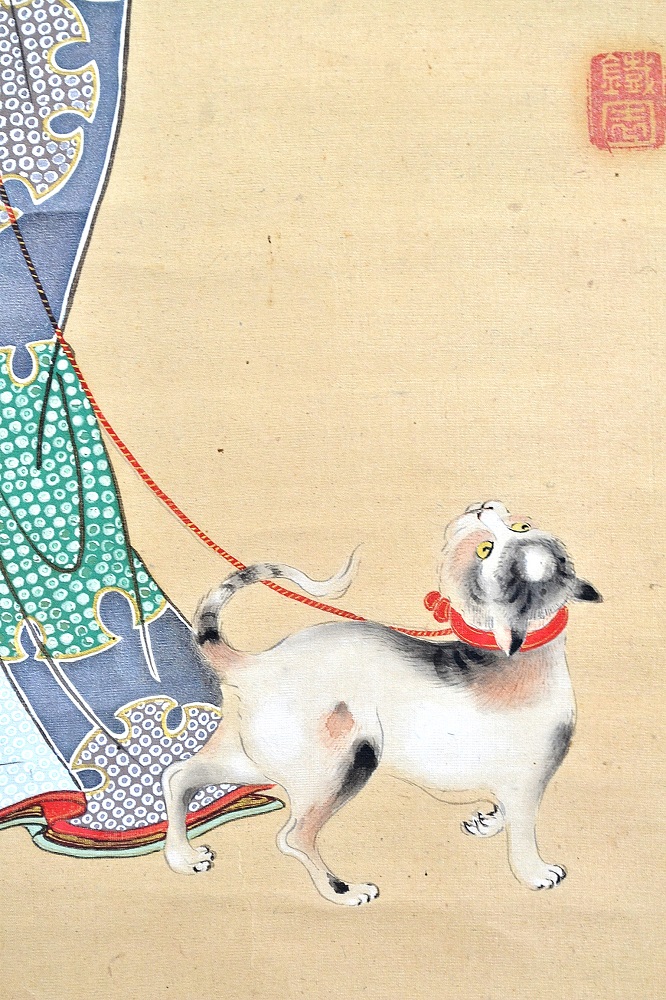
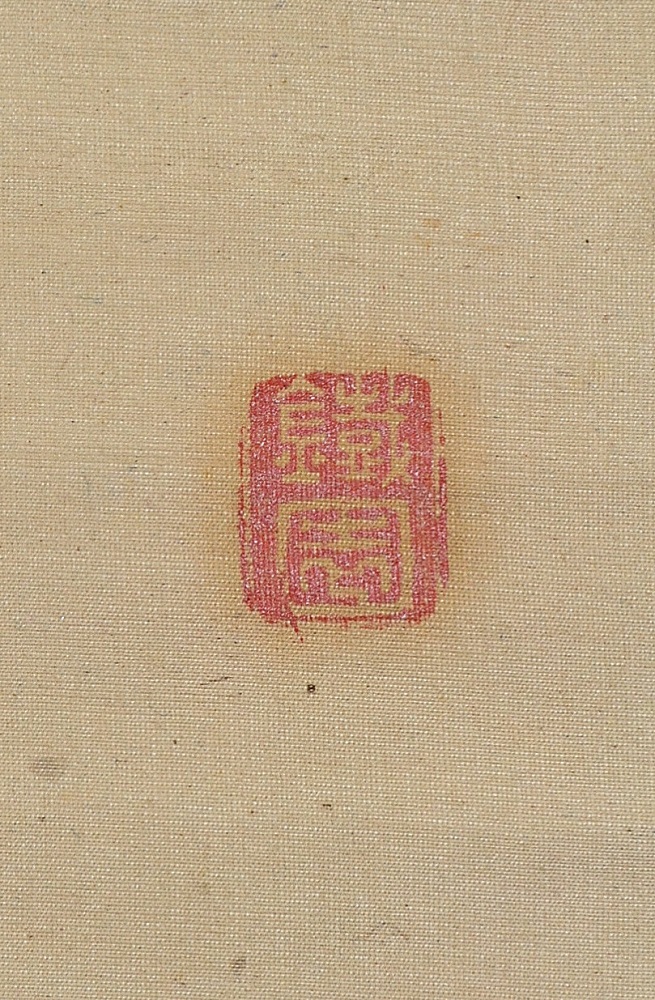
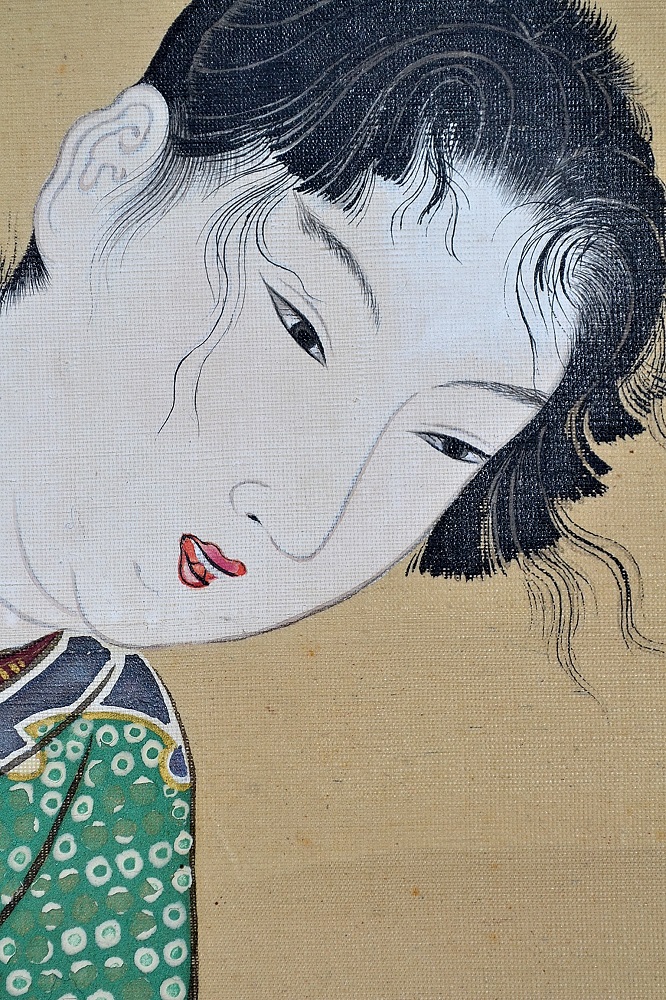
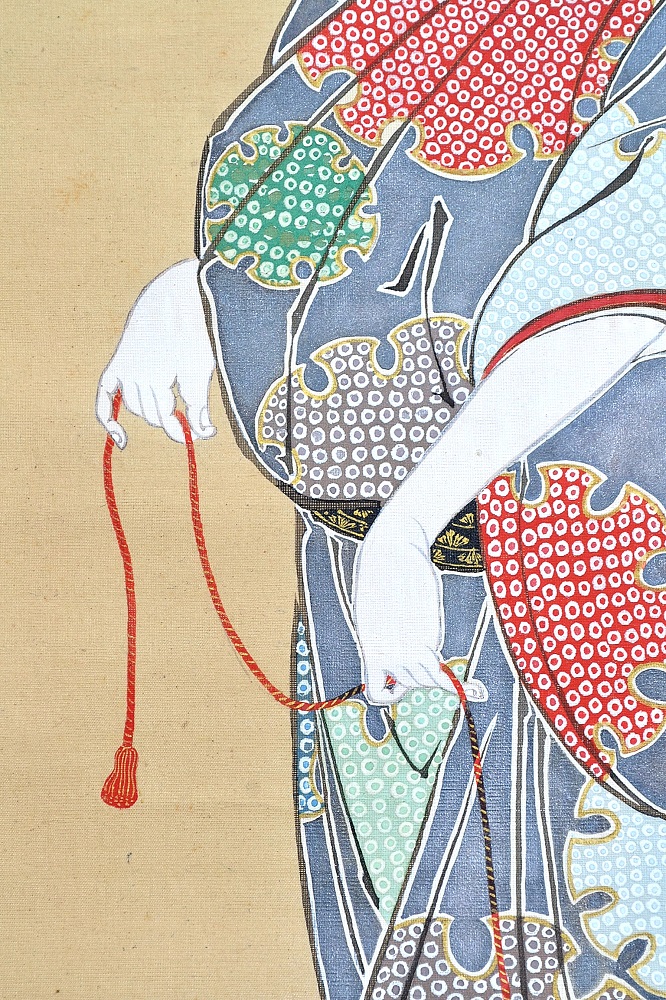
・印「鐵園」 絵の中の女性の特徴的な髪形は、「唐輪髷(からわまげ)」というもので、日本髪の原形といわれています。 安土桃山時代の天正頃(1573~92)に兵庫や堺などの上方の港町の遊女たちが結いはじめ、中国(=唐)の女性の髷を真似たところから名付けられました。 The distinctive hairstyle worn by the woman in the painting is known as the “karawamage,” which is considered the prototype of the traditional Japanese hairstyle. It was first adopted by courtesans in port towns of the Kansai region, such as Hyogo and Sakai, around the Tensh? era (1573?92) of the Azuchi-Momoyama period; the name derives from the fact that it imitated the hairstyles worn by women in China (Tang). |
| Period 製作年 |
|
| Condition 状態 |
There are creases, tears, and stains. 折れ、裂け、シミが御座います。 |
| Accessory 付属品 |
box 箱付 |
| Biography 略歴 |
【佐久間鉄園(1850~1921)】 明治~大正時代の日本画家。 嘉永3年11月22日生まれ。陸奥(むつ)仙台出身。 生家は15代にわたって仙台藩に画師として仕えた家で、父は仙台藩画員・佐久間晴岳。 母は仙台藩画員・菊田伊洲の娘。 別号に晩晴閣主人。名は健寿。字は正卿。 父や狩野派の下条桂谷(げじょう-けいこく)に画を学ぶ。 明治32年日本美術協会展で「松下牧童図」が3等賞。 新聞社の編集者や印刷業などを経て、40歳頃から創作活動を開始。 明治30年より1年間中国を漫遊、帰国後「支那歴代名画論評」「鉄園画談」を刊行。 日本美術協会で受賞を重ね、33年下条桂谷が審査長となって以後、下条門下の四天王の一人と称された。 画論に通じ、若手作家に「芥子園画伝」などを講じた。 40年文展開設に際し正派同志会結成に参加、幹事となる。 日本美術協会顧問をつとめ、また43年より大正2年まで文展審査員を務めた。 大正10年4月25日死去。72歳。 A Japanese-style painter active during the Meiji and Taisho periods. Born on November 22, 1850. A native of Sendai, Mutsu Province. His family had served as court painters to the Sendai Domain for 15 generations; his father was Sakuma Seigaku, a painter for the Sendai Domain, and his mother was the daughter of Kikuta Isu, also a painter for the Sendai Domain. His alternative pseudonym was Banseikaku Shujin. His given name was Kenshu, and his courtesy name was Seikei. He studied painting under his father and under Gej? Keikoku of the Kano school. In 1899, his work “Shepherd Boy Under a Pine Tree” won third prize at the Japan Art Association Exhibition. After working as a newspaper editor and in the printing industry, he began his creative career around the age of 40. From 1897, he traveled extensively throughout China for one year; upon his return, he published “Critiques of Famous Chinese Paintings Through the Ages” and “Tetsuen Gadan.” He won numerous awards from the Japan Art Association, and after Geij? Keikoku became chief judge in 1890, he was hailed as one of the “Four Heavenly Kings” of Geij?’s school. Well-versed in art theory, he lectured young artists on works such as *Kaishien Gaden*. In 1907, upon the establishment of the Bunten (Japan Fine Arts Exhibition), he participated in the formation of the Seha Doshikai (Orthodox Artists’ Association) and became a secretary. He served as an advisor to the Japan Art Association and as a judge for the Bunten from 1910 through 1913. He died on April 25, 1921, at the age of 72. |